Every Phoenix pool loses water in summer. The question is how much is normal. Arizona's water department gives a yearly figure you can measure against, and a few signs point past evaporation toward a leak. Use the checker above if you want a quick next step, or read on for the numbers.
How much evaporation is normal in Arizona
The Arizona Department of Water Resources says a standard 16 by 36 foot uncovered pool loses four to six feet of water a year to evaporation, and that most of it happens in summer (ADWR fact sheet).
Spread over a year, four to six feet works out to roughly an eighth to a fifth of an inch a day, or about one to one and a half inches a week. Those are averages from our own arithmetic. Because most of the loss lands in summer, a hot July week can run well above them, and a mild January week well below.
So a pool that drops an inch over a summer week is probably fine. A pool that drops an inch a day, every day, is losing far more than that yearly figure allows.
What makes evaporation worse
Wind is the big one. The same ADWR sheet says a 7 mph wind at the water's surface can raise evaporation losses by 300 percent. A breezy afternoon in an open North Phoenix backyard can take noticeably more water than a still one.
Moving water evaporates faster too. ADWR notes that aeration increases evaporation, so waterfalls, fountains, sheer descents and spa spillovers all add to the loss while they run. Heated water and a lot of splashing add more.
- Wind across the surface
- Waterfalls, fountains and spillovers running for hours
- A heated pool or spa
- Swimmers and splash-out on busy days
- Backwashing the filter, which sends water out on purpose
Signs that point to a leak instead
Evaporation rises and falls with the weather. Leaks don't care about the weather. Watch for these:
- The pool keeps dropping fast on cool, still, cloudy days.
- It drops more with the pump running, or more with it off, even with waterfalls, fountains and spillovers switched off.
- The level stops falling at the same spot every time, often the bottom of the skimmer or a light.
- There's wet ground, a soft spot in the yard, or water near the equipment.
- New cracks, loose tile, or a widening gap between the deck and the coping.
- The autofill runs constantly, or the water bill climbed with no other change.
Settle it with a bucket test
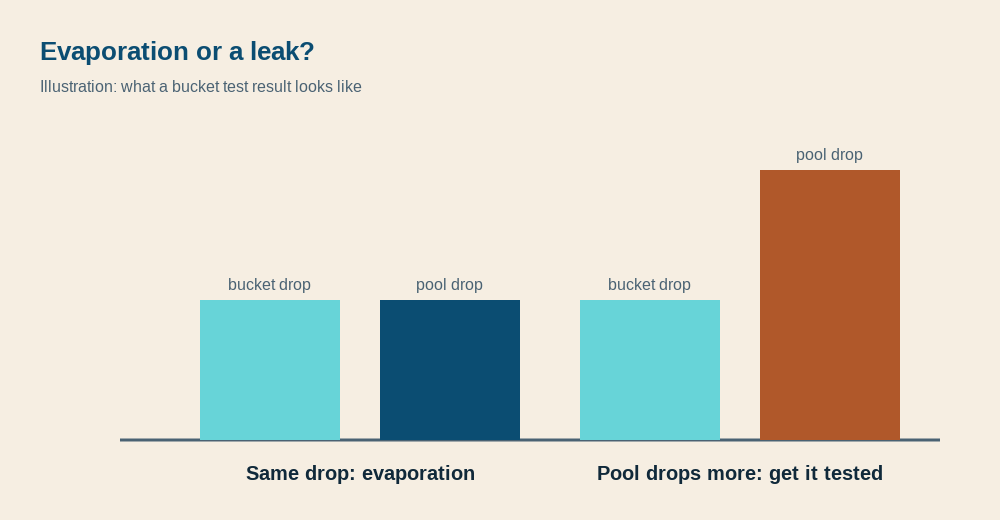
ADWR's yearly figure tells you what's normal on average, not what your pool should lose this week in your own yard. A bucket test measures that directly, takes about a day and costs nothing.
When to get it tested
The City of Phoenix says about one in 20 pools leak, and that a small leak of an inch a day can waste up to 100,000 gallons a year. If your bucket test shows the pool losing more than the bucket, or you see wet ground or cracks, it's time to have it checked.
That's what a pool leak detection visit is for. Send us the form below with your numbers and we'll set up the test.