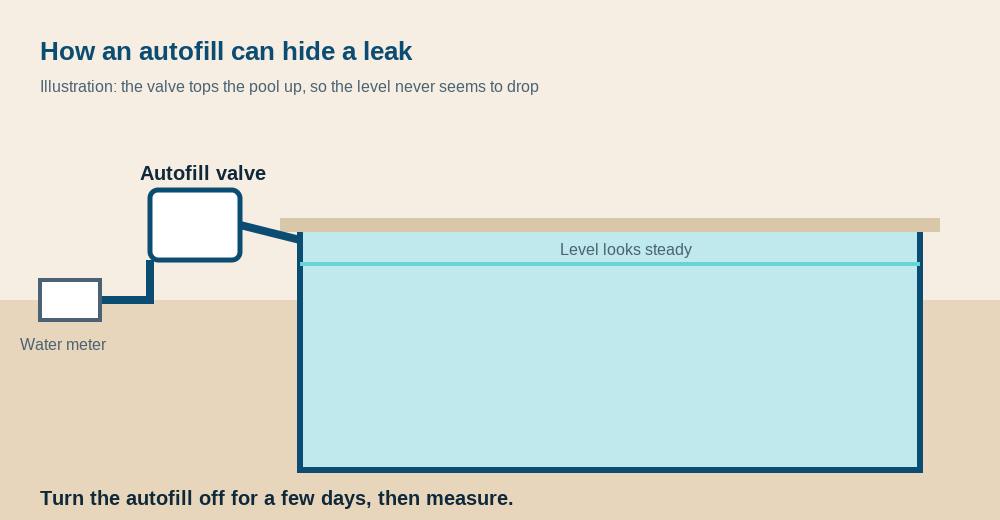
Many Phoenix pools have an autofill: a float valve that adds water whenever the level drops. It saves you from topping up by hand all summer. It also means a leaking pool can look perfectly full while it quietly runs up the water bill.
Why a full pool can still be leaking
The autofill can't tell evaporation from a leak. It just replaces whatever went missing. So the water line stays put, and the only sign is the meter or the bill.
Arizona's water department makes the same point in its pool guidance: meter the water that refills the pool, and if you notice a sharp increase, you may have a leak (ADWR fact sheet).
Check it in three steps
Shutting the autofill off for a few days lets the pool show you what it's really losing.
- Close the autofill's shutoff valve. It's usually on the supply line running to the autofill, near the pool or the equipment.
- Mark the water line on the tile or skimmer each morning for three to five days, and note the weather.
- Compare the drop to normal evaporation, or run a bucket test at the same time for a fair comparison.
Use your water meter
Your meter can show water going to the pool even when you can't see it. Pick a stretch when nobody in the house is using water, like overnight. Read the meter before bed and again first thing in the morning.
If the meter moved while nothing in the house ran, water is going somewhere. With the autofill on, that somewhere may be the pool. Run the same check with the autofill shut off. If the meter stops moving, the pool was the one using it.
When the autofill itself is the problem
The valve can wear out. If it sticks open, it keeps adding water past the normal level, and the extra can spill out an overflow line or over the edge. That looks like a leak on the bill but it's a valve problem.
Signs include a pool that sits higher than usual, an overflow line that's always running, or water near the autofill box. Tell the specialist about any of these, and ask that the autofill be checked during the test.
Write it down, then get it tested
Your notes from these checks make the leak test faster. The guide on documenting water loss has a simple log to copy.
If the pool keeps dropping with the autofill off, or the meter keeps moving, set up a pool leak detection visit with the form below.