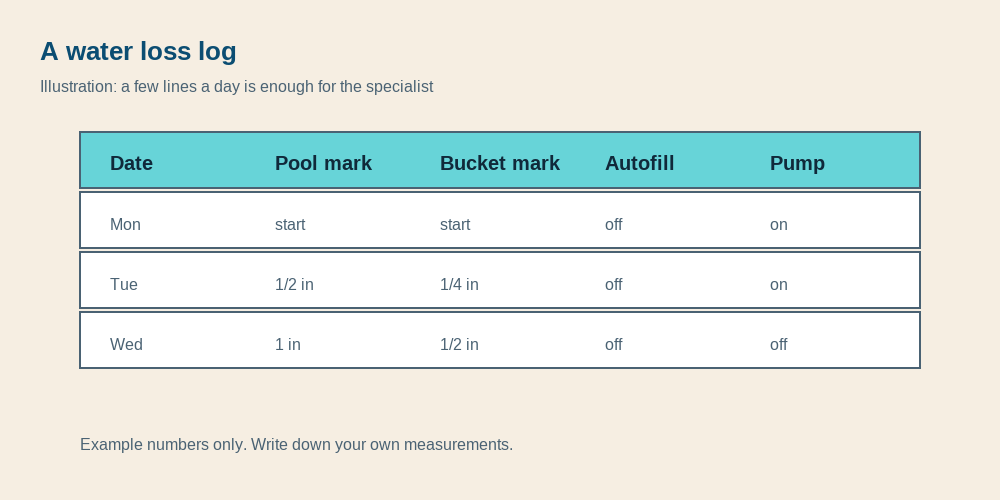
Specialists ask the same questions on every leak call: how much is it losing, since when, with the pump on or off, and is the autofill running. Having the answers written down makes the test faster and gives you a record for any repair or insurance question later.
Keep a daily log
Once a day, at about the same time, write down five things. A notebook or a note on your phone is enough.
- The date and time
- How far the water line dropped since yesterday
- Whether the autofill was on or off
- Whether the pump ran, and roughly how long
- The weather: hot, windy, cloudy, rain
Add a bucket test
One bucket test makes the log far more useful, because it shows how much of the drop was evaporation. Note the bucket's drop next to the pool's drop for the same 24 hours. Here is how to do a bucket test if you haven't run one.
Photograph what you see
Take dated photos of anything that might matter: the water line against the tile, cracks with something for scale, wet ground, drips at the equipment pad. Take the same shots a week later so changes show up.
Keep photos of the autofill and the equipment's labels too. They help the specialist plan what to bring.
Keep your water bills and meter readings
Arizona's water department suggests metering the water that refills the pool, and says a sharp increase may mean a leak (ADWR fact sheet). If the bill jumped, keep the bills from before and after. Overnight meter readings, taken when nobody is using water, are useful too.
Who uses the record
The leak specialist uses it to decide where to start. The repair company uses it to check the fix worked. If you file an insurance claim, your insurer may ask when the loss started and how you found it.
When you're ready, send us the numbers with the form below and we'll set up a pool leak detection visit.