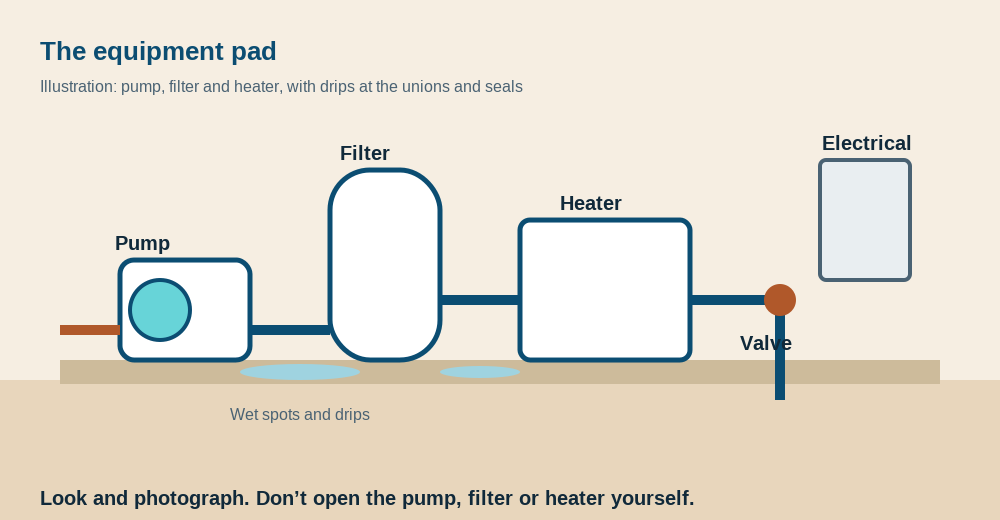
The equipment pad is the one part of the pool's plumbing you can see. That makes it a good first place to look. It's also where water and electricity sit side by side, so look carefully and keep your hands off.
Where pad leaks come from
Water moves through the pump, filter, heater and valves under pressure, and every connection between them has a seal. Common spots are the unions that join pipes to equipment, the pump's shaft seal, the filter's lid or drain plug, valve stems, and the heater's connections.
Small drips add up in a Phoenix summer, when the pump runs for hours a day.
What to look for and photograph
Check the pad with the pump running and again with it off. Take photos of anything you see, with the date.
- Puddles under the pump, filter or heater
- Drips at the unions or valve handles
- White or crusty buildup at a joint, a sign water has been evaporating there
- Water spraying or misting while the pump runs
- Wet ground around the pad, or a line that's always damp
When to turn the equipment off
Turn the pump off at the timer or switch you normally use if water is spraying from the equipment, if the pool level has dropped below the skimmer, or if a part is visibly broken. Only do it if you can reach the switch without standing in water.
If water is near the electrical panel, if breakers keep tripping, or if anything sparks or smells hot, stay away from the pad. Call an electrician for the electrical side. Leave the pump, filter and heater closed: opening them under pressure can injure you.
Pad leaks vs. leaks you can't see
A drip at the pad rarely explains a big drop in the pool. If the pool loses more than a bucket test explains and the pad looks dry, the water is leaving somewhere you can't see, such as a buried line or the shell. The guide on plumbing vs. structural leaks covers those.
What pad repairs cost
HomeGuide's national figures: equipment pad repair $250 to $1,000, pump repair $50 to $650, and fitting or connection repair $50 to $300. A leak test checks the pad along with the rest of the pool, so set up a pool leak detection visit if the source isn't obvious.